What is diabetic retinopathy?
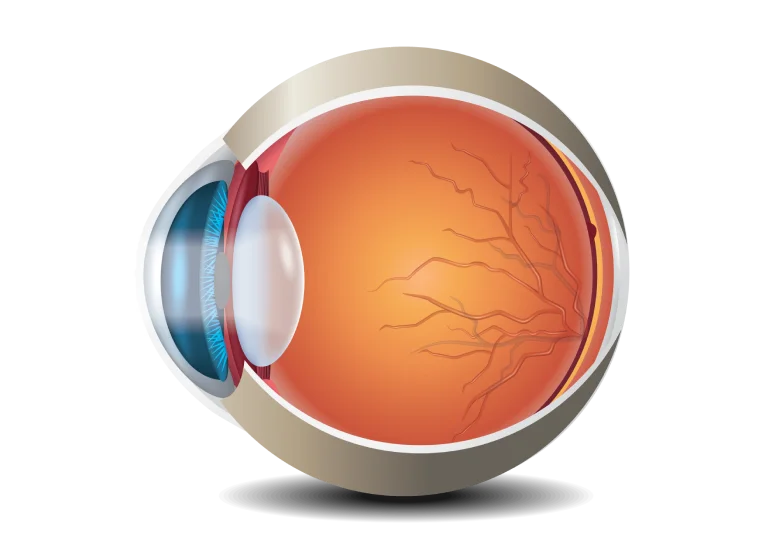
Diabetic retinopathy is the name given to disorders in the retinal layer due to diabetes. Diabetes is a metabolic disease characterized by elevated sugar levels due to insufficient or ineffective insulin.
When is diabetic retinopathy seen?
The risk of diabetic retinopathy is higher in Type I diabetes. The longer the duration of diabetes, the higher the risk of diabetic retinopathy. For example, if diabetes occurs before the age of 30, the risk of diabetic retinopathy is 50% in 10 years and 90% in 30 years.
What are the Symptoms of Diabetic Retinopathy?
Early signs of diabetic retinopathy are small vessel ballooning (microaneurysms) and retinal hemorrhages. As a result of fluid leakage from these hemorrhages, fluid accumulation called edema occurs in the visual center called macula and causes loss of vision.
Over time, these eye damages progress in uncontrolled diabetes. As a result of the retina being deprived of oxygen, unwanted new vascular formations appear in the retina. These new vessels are extremely sensitive and prone to bleeding. In diabetic retinopathy that has reached this stage, sudden loss of vision may occur with sudden intraocular bleeding from these vessels.
Which tests are used in the diagnosis and follow-up of diabetic retinopathy?
In addition to routine examinations in diabetic retinopathy, eye angiography (FFA – fundus fluorescein angiography) and retinal tomography (OCT – optic coherence tomography) may be necessary. With these tests, it can be determined whether or not treatment is necessary, what kind of treatment will be applied, and if laser treatment is to be applied, in which areas it will be applied.
Use of laser in the treatment of diabetic retinopathy:
When diabetic retinopathy occurs, the first treatment is laser photocoagulation. For laser treatment, diabetic retinopathy must reach a certain stage. Then the laser is applied. Since laser treatment is a special treatment, it should be performed carefully by doctors who specialize in this field.
Intraocular needle therapies in the treatment of diabetic retinopathy:
In recent years, many medicines have been developed to stop or prevent bleeding in the eye and to reduce macular edema. These medicines are injected into the eye in very small amounts with a very fine needle. treatments should be given at regular intervals. The effect of the injections is temporary and the disease is permanent.
Vitrectomy surgery in the treatment of diabetic retinopathy:
Vitrectomy surgery is necessary if laser or needle treatments are not effective or if treatment is too late. Every effort should be made to avoid the surgical stage.
The most effective way to prevent diabetic retinopathy is to keep blood sugar at an ideal level.
A patient with diabetes should have an eye and retinal examination at least once a year. If bleeding in the retina has started, examinations should be more frequent. In addition, if a patient with diabetes experiences a sudden decrease or loss of vision, a retinal examination should be performed immediately.