A new option in dry eye treatment: Click here for information about Rexoneye
Dry eye or dry eye is a chronic condition. Current treatments are aimed at reducing symptoms rather than curing them. The new alternative for real treatment. IPL light therapy. However, it is popularly known as laser treatment. Eyelight IPL treatment is successfully applied in our clinic. This treatment, which has no risk, is applied in a few minutes and is painless. Our specialist doctors will inform you whether you are suitable for IPL treatment after the examination.
Alternative treatment for dry eye: **Complaints of burning, stinging and watering in the eyeare symptoms of dry eye. If your complaints do not go away with drops, you have an alternative: Tiny plugs called punctum plugs are placed at the end of the tear duct, allowing your own tears to stay in your eyes longer. This procedure is not an operation but is easily done in the examination room. Although it is widely used especially in America, it is not well known in our country. Plugs are applied in Kaşkaloğlu Eye Hospital.
Tears keep the eye healthy and make us feel comfortable when blinking. In some people, tear production decreases or the quality of the tears produced deteriorates. The resulting condition is known as Dry Eye . There are two options for treatment: artificial tear drops and a plug (punctum plug).
Tears are produced in two different ways. One is a small but continuous production and secretion of tears to moisturize the surface of the eye. The other is the production of excessive amounts of tears in emotional states and in response to any discomfort in the eye.
In a healthy eye, tears are continuously produced and secreted to provide moisture. Excessive production occurs when the eye is irritated by a foreign body, when the eye is dry or when the person is crying.
Dry Eye – What are the Symptoms of Dry Eye?
- Stinging and burning sensation in the eyes
- Itching in the eyes
- Watery eyes
- Accumulation of a sticky, stringy fluid (burr) in and around the eye
- Watery eyes
- Difficulty wearing contact lenses
What is the Tear Layer?
Blinking creates a tear layer on the surface of the eye, which keeps the surface clean and smooth. Without this layer, clear vision cannot be achieved. This layer consists of three separate layers;
- Oil layer
- Water layer
- Mucus layer
The fat layer is formed by glands called meibomus. This layer is the outermost layer and its purpose is to smooth the surface of the eye and reduce evaporation. Water, which is what we think of when we think of tears, forms the middle layer. This layer, formed by the lacrimal gland, provides eye cleansing by removing foreign bodies and irritants from the eye.
At the bottom is the mucus layer formed by the conjunctiva. This layer allows water to spread over the surface of the eye and keep it moist. Without the mucus layer, water cannot adhere to the surface.
Dry Eye – What Causes Dry Eye?
Tear production decreases with age. Although dry eye disease can occur in both men and women at any age, it is more common in women, especially in the post-menopausal period.
Dry eye disease can also be associated with other diseases. For example, the presence of dry eyes, dry mouth and arthritis may indicate the presence of Sjögren’s disease.
Many medications can cause dry eye disease by reducing tear secretion. Please tell your ophthalmologist if you are taking any of the following medications:
- Diuretics
- Beta-blocker
- Antihistamine
- Sleep medicines
- Painkillers
- Nerve medicine
Where the use of these medicines is necessary, if the person cannot tolerate dry eye, they should be treated with artificial tears and their symptoms reduced to a tolerable level.
People with Dry Eye are more sensitive to the toxic effects of all eye drops, including artificial tear drops. For example, some eye drops and artificial tear drops contain preservatives which can cause eye irritation. For this reason, it would be more appropriate for people with Dry Eye to use products that do not contain preservatives.
Dry Eye – How is Dry Eye Disease Diagnosed?
The ophthalmologist can usually diagnose the disease by examination. Sometimes, however, tests to measure the amount of tears may be necessary; the Schirmer test is a test used to measure the amount of tears under certain conditions by placing a special paper on the lower eyelid. Another method is to detect the pattern of dryness on the surface of the eye with a drop (fluorescein or rose bengal).
Dry Eye – Dry Eye Treatment
Summary: In addition to tear drops, the newest treatment is IPL and Rexoneye (Resoneye), also known as light therapy. IPL treatment is applied in a few minutes and has no risks or side effects. Rexoneye (Resoneye) treatment is applied in 4 sessions. It contributes to dry eye treatment by stimulating the tear glands. Artificial tear drops are mainly used for dry eye complaints. When drops are insufficient, tiny plugs called punctum plugs are also very useful. Omega 3 is useful as an additional treatment.
Dry eye tests: The amount of tears is measured with the BUT, Schirmer and PRT tests. The important thing is the patient’s complaint. If the patient complains of burning, foreign body sensation, watering, treatment is given. If the patient has no complaints, no matter what the tests show, no treatment is necessary.
Artificial Tear Drops:
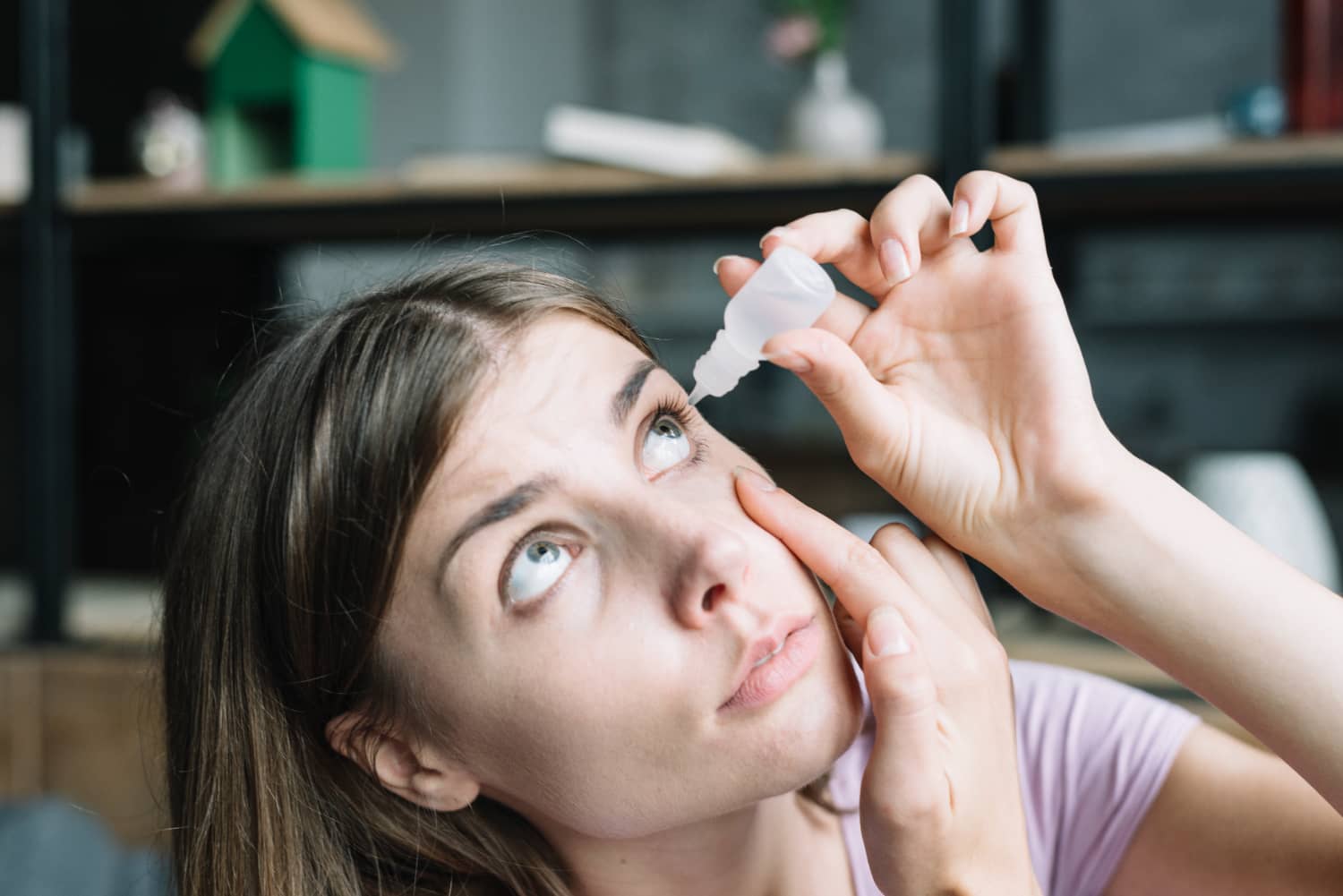
Artificial tear drops, which resemble real tears and keep the eye moist, are very effective in the treatment.
Artificial tear drops are available from pharmacies. There are different types of artificial tear drops, you can try a few of them and use the one that is most suitable for you.
If you are allergic to preservatives, it would be appropriate to choose artificial tear drops that do not contain these substances.
You can use these drops as needed, you can use them several times a day or several times an hour.
Punctum plug (Tear Duct Plug):
Tears flow through a small duct into our nose (this is why our nose also runs when we cry). When dry eye occurs, tears are reduced but not completely absent. To keep more tears in the eye, tiny plugs are placed at the entrance of the tear duct that drains the tears into the nose, so that the person’s own tears moisturize the eye more and the symptoms are reduced. Punctum plugs can be temporary and permanent. Temporary ones dissolve and disappear after a few months, while permanent ones are effective for longer periods. The use of punctum plugs is not common in our country, but it is the first treatment that comes to mind when dry eye occurs, especially in America. Since it is not known, patients think of the plugs as an operation and hesitate. However, these plugs are very tiny and are simply placed by the ophthalmologist in the examination room. If you have dry eye complaints, first have a temporary punctum plug inserted and if your complaints decrease and you are satisfied, you can apply for a permanent punctum plug. Permanent and temporary plugs are applied to patients in Kaşkaloğlu Eye Hospital.
Other Methods:
Tears evaporate like other liquids. Measures to reduce evaporation can help keep the eye moist for longer. For example, heaters in your winter environment have a drying effect on the air; a little water on the radiator can help keep the air moist. People who live in well-heated houses or in air-conditioned environments are more likely to suffer from dry eyes. You may find that your symptoms are less in a natural environment.
Keeping the edges of the frames of the glasses you wear closed can protect your eyes from the drying effect of the wind.
People with dry eye disease should avoid anything that can cause dryness; a very hot room, hair dryer or wind are examples.
Some people with dry eye disease may have severe itching and blurred vision when they get up in the morning. Artificial tear gels or heavy artificial tear drops can be used before bedtime to reduce this complaint. However, gels should be used as little as possible as they can cause blurred vision.
The use of omega3 capsules is known to be beneficial in patients with dry eye.
Use of contact lenses and glasses in dry eyes and dry eyes: Contact lenses can be used if the complaints are not too severe. It depends on the patient’s condition and complaints. Patients usually decide for themselves whether to use contact lenses or not. There is no harm in using glasses.
Is Lasik surgery performed in dry eye? This is a very common question. Dry eye disease usually occurs at an older age, whereas most of the patients who apply for Lasik are younger and their complaints of dry eye are not due to actual dry eye disease, but to the use of contact lenses for many years. Anyway, when these people stop using contact lenses, their dry eye complaints will disappear, so there is no harm in Lasik. However, your doctor will still make the final decision.
Since dry eye can be associated with blepharitis, inflammation of the eyelids, the following information may also be useful:
Blepharitis – What is eyelid inflammation?
Blepharitis is a chronic inflammatory disease of the eyelid. It is a very common problem in both children and adults. There are complaints of redness, itching and stinging at the edge of the eyelids. There are two types, the first is seborrheic blepharitis seen in oily skin and the other is caused by microbial factors. Seborrheic blepharitis is actually a condition that affects the whole skin. In seborrheic blepharitis, the structure of the tear is disrupted. Hormones, nutrition, physical fatigue, stress can cause this condition to occur. In such a case, the edges of the lid are red. There is dandruff at the base of the eyelashes. At the edge of the lid, the tear with an impaired structure accumulates and forms crusts that can be easily removed. Microbial blepharitis is more serious. It usually starts in childhood and continues until adulthood. There are hard crusts on the lid margins that bleed when lifted. These crusts make it difficult to keep the eye open. Blepharitis caused by the demodex parasite, which is especially common in older people, is treated with special medications and light therapy.
Blepharitis – How is eyelid inflammation diagnosed?
Blepharitis is recognized by biomicroscopic examination during routine eye examination.
Blepharitis – How to treat eyelid inflammation?
The current option for treating blepharitis (eyelid inflammation) is light treatments known as IPL and LLLT.
Both types of blepharitis are treated in the same way. Treatment is mainly aimed at keeping the edges of the lids clean. It is important to remember that blepharitis is actually a skin disease and can stay with you for life. The aim of treatment is to reduce the symptoms and give you relief. Antibiotic drops and ointments are useful in severe cases. Cortisone drops relieve symptoms such as itching and irritation, but other side effects of the drug may occur in long-term use.
Hot compresses can provide relief. To do this, soak a small clean towel in as much hot water as you can stand and wring it out. Close your eyes and hold the towel over your eyes for 5-10 minutes. In between, if necessary, wet the towel again with hot water. This procedure increases the blood circulation in the eyelids, accelerates healing and cleanses the sebaceous glands by opening their mouths.