General Information About Glaucoma (Eye Pressure)
In our Glaucoma Unit of Izmir Kaşkaloğlu Eye Hospital, regular follow-up of our patients is performed by a glaucoma specialist ophthalmologist with eye pressure measurements, computerized visual field, RNLF and other examinations. Glaucoma patients can be treated with medication, laser or surgery in our clinic. What is Glaucoma – eye pressure? What are the symptoms of glaucoma- eye pressure? How is glaucoma – eye pressure treated? You can find answers to your questions. Non-surgical laser glaucoma treatments SLT (selective laser therapy) and MicroPulse® Transscleral Laser Therapy (TLT) are performed in our hospital. ECP (endoscopic cyclophotocoagulation) treatment is performed in our hospital for glaucoma patients who do not respond to other treatments. You can get detailed information about glaucoma and eye pressure operations by calling +90 532 376 64 98.General Information About Glaucoma (Eye Pressure)
In our Glaucoma Unit of Izmir Kaşkaloğlu Eye Hospital, regular follow-up of our patients is performed by a glaucoma specialist ophthalmologist with eye pressure measurements, computerized visual field, RNLF and other examinations. Glaucoma patients can be treated with medication, Selective Laser Therapy (SLT) or surgery in our clinic. What is Glaucoma – eye pressure? What are the symptoms of glaucoma – eye pressure? How is glaucoma – eye pressure treated? You can find answers to your questions. ECP treatment is performed in our hospital for glaucoma patients who do not respond to other treatments .Since glaucoma (eye pressure) does not show symptoms until advanced stages and results in blindness when left untreated, early diagnosis is very important.
Glaucoma can only be detected by an ophthalmologist examination. There are many ophthalmologists and eye hospitals in Izmir that specialize in the diagnosis and treatment of glaucoma. So it is easy to reach an ophthalmologist specialized in glaucoma. Only measuring eye pressure is not enough for early diagnosis of glaucoma.
- Those with a family history of glaucoma,
- Over 40 years of age,
- Cortisone users,
- Those who have had an eye injury should have an eye examination every 1-2 years.
What is Glaucoma (Eye Pressure)?
Glaucoma, or glaucoma, is the name given to a group of diseases that can cause vision loss and blindness by damaging the optic nerve of the eye. Glaucoma occurs when the fluid pressure inside the eye rises. Vision loss can be prevented with early diagnosis and treatment.
The optic nerve is a bundle of more than one million fibers. It provides communication between the retina and the brain. The retina is a layer of light sensitive tissue at the back of the eye. A healthy optic nerve is necessary for clear vision.
What are the Types of Glaucoma?
Open-angle glaucoma is the most common type of glaucoma. Other types of glaucoma are less common.
Low or Normal Tension Glaucoma
It is the occurrence of optic nerve damage and vision loss in people with normal intraocular pressure. The progression of the disease can be slowed in some patients by lowering the intraocular pressure by at least 30% with medication. Despite low intraocular pressure, progression may continue.
Risk factors, such as low systemic blood pressure, can be easily identified through a detailed history questionnaire and further investigations. If no risk factors are identified, the treatment options are the same as for open-angle glaucoma.
Open Angle Glaucoma
Open-angle glaucoma is a chronic, slowly progressive form of glaucoma that usually affects both eyes. Open angle glaucoma is the most common type of glaucoma. The anterior chamber angle is open but there is high intraocular pressure and visual field defects.
Open-angle glaucoma is an insidious, painless, slowly progressing disease. For this reason, patients who are not checked frequently are recognized in the later stages when vision loss becomes apparent. The risk of developing this disease in close relatives of glaucoma patients is 5-6 times higher than in other people. For this reason, especially these people should not neglect their periodic controls.
Closed Angle Glaucoma
Fluid from the front of the eye cannot reach the angle and drain out of the eye. The angle is blocked by part of the iris. Sudden intraocular pressure rises can be seen in patients with this type of glaucoma. Symptoms such as eye pain, watering, redness, blurred vision may occur. In this case, it is necessary to intervene quickly.
This is a medical emergency. If you cannot reach your doctor, you should contact the nearest clinic. If left untreated, it can progress to blindness in as little as a day or two. Generally, laser and drug treatment can prevent vision loss by removing the obstacle in front of the angle.
Congenital Glaucoma
Babies with congenital glaucoma have a defect in the angle from birth that slows fluid drainage. These babies have prominent symptoms such as light sensitivity, watery eyes and corneal haze. Preventive surgery is usually recommended for these patients. Because the effectiveness of drug treatment in infants and its side effects are not fully known. It is also difficult to administer medication in infants. Surgical treatment is effective and safe. If surgical treatment is performed promptly, these babies will have the chance to see clearly.
Glaucoma due to other causes:
Glaucoma can also develop secondary to other medical problems. Glaucoma can occur due to eye surgery, advanced cataracts, eye injuries, some tumors and uveitis. For example, pigmentary glaucoma is a type of glaucoma that develops as a result of pigments separating from the iris blocking the angle and slowing fluid drainage. Although rare, diabetics can also develop a type of glaucoma called neovascular glaucoma. Cortisone drops can also cause glaucoma in some people. Treatment may include medications, laser surgery or conventional surgery.
Causes and Risk Factors:
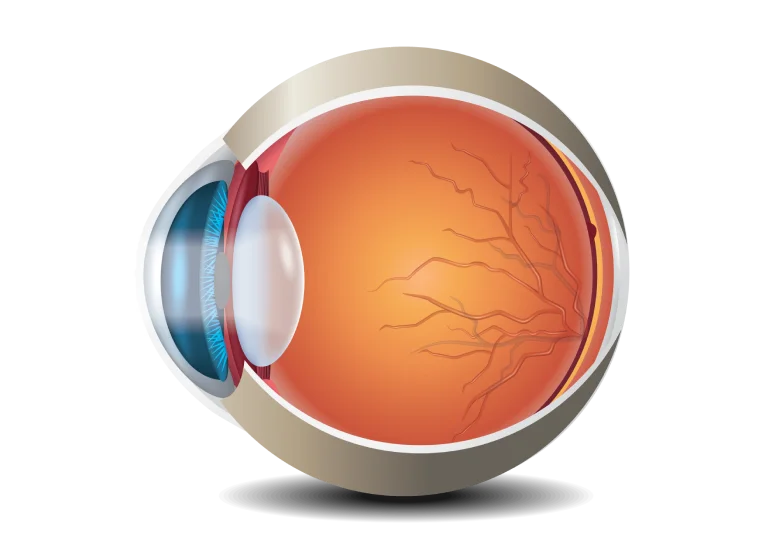
The chamber at the front of the eye is called the anterior chamber. There is a constant flow of fluid in the anterior chamber; fluid comes in from one side and leaves the eye through the area called the angle, where the cornea and iris meet, while providing nourishment to nearby tissues. When the fluid reaches the angle, it is resisted by a spongy structure and leaves the eye. Sometimes the drainage of this fluid slows down and the intraocular fluid pressure may increase and reach levels that may damage the optic nerve. High intraocular pressure damages the optic nerve, which can result in vision loss. Therefore, it is very important to control intraocular pressure.
DOES EVERYONE WITH HIGH EYE PRESSURE HAVE GLAUCOMA?
If your eye pressure is high, you are at risk for glaucoma. Only patients with damaged optic nerve are diagnosed with glaucoma. If there is no optic nerve damage, glaucoma is not diagnosed even if the intraocular pressure is high, but it is considered in the risk group. You should carefully follow the recommendations of your ophthalmologist.
Whether glaucoma develops depends on the degree of intraocular pressure that the optic nerve can tolerate without damage. This limit value is different for everyone. This is why an optic nerve examination with drops is so important. This will give your ophthalmologist an idea of the degree of pressure that is normal for you.
DOES EVERY PERSON WITH HIGH INTRAOCULAR PRESSURE DEVELOP GLAUCOMA?
Not all patients with high intraocular pressure develop glaucoma. Some people can tolerate high intraocular pressure better. A certain level of intraocular pressure may be high for one person and normal for another.
CAN GLAUCOMA DEVELOP WITHOUT HIGH INTRAOCULAR PRESSURE?
Glaucoma can also develop without an increase in intraocular pressure. This is called low-pressure glaucoma and is not as common as open-angle glaucoma.
WHAT ARE THE RISK FACTORS FOR GLAUCOMA?
People over 60 years of age
People with a family history of glaucoma (genetic predisposition)
Eye injuries
Diabetes
Long-term cortisone therapy
High, low blood pressure
Myopia
Diabetes
Migraine
Risk factors can be identified through a detailed examination and tests, including intraocular pressure, corneal thickness and optic nerve analysis. The development of glaucoma can be prevented in approximately half of the patients in the high-risk group with medication. Patients in the risk group should undergo a detailed eye examination every year.
WHAT SHOULD BE DONE TO PREVENT VISION LOSS?
Studies have shown that early diagnosis and treatment of glaucoma is the most important way to prevent serious vision loss. As a result, people who are in the risk group for glaucoma should be examined by an ophthalmologist once a year.
If you are recommended to use drops, you should use them regularly every day and do not neglect your controls. In Izmir Kaşkaloğlu Eye Hospital, glaucoma patients are usually first recommended laser treatment.
You should also warn your family members and friends who are in the high-risk group and have them examined every two years. Remember that early diagnosis and treatment can slow the progression of the disease and prevent vision loss.
In the early stages of the disease, there are no symptoms, vision loss has not yet developed and there is no pain.
As the disease progresses, the person notices a decrease in vision. He/she can see clearly in front of him/her but may not be able to see objects on the sides. If left untreated, vision loss progresses and the patient is unable to see the surroundings and begins to see as if looking through a tunnel, resulting in a complete loss of vision.
Glaucoma can affect one eye or both eyes.
HOW IS GLAUCOMA DIAGNOSED? HOW IS GLAUCOMA DIAGNOSED?
The diagnosis can be made after a detailed examination and tests.
Since glaucoma is a disease that requires lifelong treatment, the diagnosis should not be finalized without the following tests:
*Eye pressure measurement
*Central corneal thickness measurement
*Computerized visual field examination
*Optic nerve head topography
GLAUCOMA TREATMENT
The treatments do not restore lost vision but prevent the progression of vision loss.
GLAUCOMA AND DRUG TREATMENT
Eye drops or oral tablets are the most commonly used treatment in the early stages. Some medications are effective by reducing the production of intraocular fluid, others by facilitating the removal of the fluid from the eye. However, continuous use of medication can be problematic in chronic conditions such as glaucoma due to both the difficulty of use and allergies. For this reason, we prefer SLT laser treatment for open-angle glaucoma in our hospital. SLT treatment is a painless and very short procedure and has no side effects.
Before starting treatment, inform your doctor about any other medicines you are taking. Glaucoma medicines can be used several times a day. Most people have no side effects. Rarely they may cause headaches or other side effects such as burning or redness of the eye. There are different medicines that can be used for glaucoma, so tell your doctor if you have problems with the one prescribed for you. Your doctor may change the dose of your medicine or recommend another medicine.
Since glaucoma has no warning symptoms, patients often stop taking the medication or forget about it. Medicines are only effective for as long as they are used, so it is important to use them regularly. You should learn from your doctor how to use your drops and apply them appropriately.
GLAUCOMA LASER SURGERY: SELECTIVE LASER TRABECULOPLASTY (SLT) GLAUCOMA TREATMENT
Glaucoma (eye pressure) is an eye condition that occurs when the fluid pressure in the eye is high enough to cause damage to the optic nerves and a decrease in visual field. Open-angle glaucoma is the most common type. Glaucoma occurs when the required amount of fluid cannot be discharged due to obstruction in the channels that drain the intraocular fluid out of the eye and therefore the intraocular pressure increases. Glaucoma (eye pressure) reveals the importance of early detection and treatment, as there is no return to the previous state after the decrease in vision. In treatment methods, the formation of intraocular fluid is reduced or its outflow is increased and the patient’s eye health is restored.
To date, the use of eye drops has been the first treatment option to reduce intraocular pressure to normal limits. However, reasons such as the high cost of the drops used, patients not using them regularly, and side effects cause a decrease in the recovery rate of patients with eye pressure. The negative factors of drug treatment methods have paved the way for the development of alternative treatments.
Surgical interventions have been used in the treatment of glaucoma for 50 years. However, surgical methods are preferred as a last resort for patients who lose their vision despite receiving drop and laser treatment. Even if glaucoma surgery is successful, it involves a higher risk compared to laser and drop therapy methods.
Selective treatment methods developed in the treatment of glaucoma ensure that patients are kept away from medication and the risks that may be seen in surgeries. The first of these treatment methods is the Argon Laser Trabeculoplasty (ALT) laser method. The fact that this treatment was not sufficiently effective and that the areas where the laser was applied closed again, causing the pressure to increase, led to the development of different methods. In recent years, Selective Laser Trabeculoplasty (SLT) has become the new type of laser treatment approved and used by most of the world and the FDA. The device has been used safely in the treatment of open angle glaucoma in the world, in our country and in our hospital.
Unlike ALT, the SLT laser essentially does not create visible scarring in the canal system. SLT works on the principle of selective removal of intracellular pigments that cause swelling and blockage of the eye canal. The SLT laser expands and opens age-related clogged and narrowed canal pores.
Selective Laser Trabeculoplasty (SLT) is reported to be an effective and safe alternative treatment method compared to Argon Laser Trabeculoplasty (ALT).
At the same time, SLT can be applied as a primary treatment and is also recommended as a reproducible treatment method in patients who cannot be controlled with medical treatment and in patients with increased IOP (Intraocular Pressure) after ALT.
SLT is now replacing ALT in the primary treatment of open glaucoma. Unlike the argon laser procedure, SLT can be used in all patients with open glaucoma. For example,
- Replacing eye drops as the first line of treatment for newly diagnosed glaucoma patients,
- Reducing or eliminating the need for drops in glaucoma patients who use one or more tear drops,
- Chronic glaucoma patients who have been on treatment for a long time and have received one or two courses of ALT therapy are preferred because they cannot receive more ALT therapy.
GLAUCOMA SURGERY
This surgical procedure creates a new pathway through which the fluid can drain away from the eye. This may be recommended by your doctor at any time. It is usually recommended for patients whose intraocular pressure cannot be reduced despite medication and laser treatment. This surgery can be performed in an eye clinic or hospital. You will be given medication to relax before the operation. Your eye will be numbed with a needle-free method by instilling drops. A small piece of tissue is cut away to create a pathway for the fluid to drain away from the eye.
For a few weeks after the operation you will need to use drops to prevent infection and inflammation. These are different from the drops you use before surgery.
This procedure is not applied to both eyes at the same time. It is completed in four to six weeks. It is 60% to 80% effective in reducing intraocular pressure. If the newly created pathway narrows over time, it may be necessary to repeat the surgery. This surgery is particularly effective in patients who have not had previous eye surgery such as cataracts.
Some patients may have some deterioration in visual quality after the operation. There are side effects such as cataract, corneal problems, intraocular inflammation and infection. Some patients may have shadowing in vision.
Express Tube in the treatment of Glaucoma (Eye Pressure):
Glaucoma patients can undergo surgeries with the method of placing a tube in the eye and your doctor decides which one to perform.
HOW TO USE GLAUCOMA DROPS?
You should use the eye drops recommended to you regularly and in accordance with your doctor’s recommendations. Regular and appropriate use of your medicines increases their effectiveness and reduces the incidence of side effects.
You should wash your hands before instilling the drops. You should tilt your head back and drop the drops into your lower eyelid. You can take the drop bottle in one hand and pull your lower eyelid downwards with the other hand to create a pocket for the drops. If you are instilling more than once or using more than one drop, you should wait at least five minutes before instilling the second drop. If you apply pressure with your fingers to your tear duct for about a minute after instilling the drops, the drops will not enter the tear duct and the risk of side effects will be slightly reduced.
REMEMBER!
- Early diagnosis and treatment is very important in glaucoma. Do not neglect your eye checks!
- Glaucoma is a chronic disease and you need to use your drops every day!
- Treatment lasts a lifetime!
- You must be determined and patient to preserve your eyesight!