Click here for Youtube videos: Yellow spot disease
Click here for videos on epiretinal membrane formation .
Treatment options include medication, intraocular injections and surgery depending on the type of the disease. Telescopic lenses can be in the form of binocular glasses or surgically implanted in the eye. Click here for information about the Valeda light system, a new treatment for dry yellow spot disease.
Age-related yellow spot disease, commonly known as yellow spot disease macular degeneration It is the most important cause of vision loss over 50 years of age. The cause of the disease is the accumulation of metabolic residues in the retina, the innermost layer of the eye, with age and the formation of new blood vessels due to circulatory problems. There are two types: dry and wet.

How Many Types of Disease Are There?
There are 2 types of the disease, wet and dry type. In the dry type, the prognosis is good and progresses slowly. 90% have dry type disease. In the wet type, the disease progresses faster. Symptoms of yellow spot disease include broken or wavy vision, difficulty in reading, dull colors, blurred vision, blurred vision and clearer peripheral vision. The most important risk factors are age and genetic predisposition. In addition to these, sunlight, smoking, high cholesterol, obesity and hypertension are also effective. SMOKING SHOULD BE QUIT Click here for VALEDA, a new treatment alternative for dry type yellow spot disease.
Fundus fluorescein eye angiography, fundus fluorescein eye angiography and eye tomography are used in the diagnosis. In eye angiography, a dye-containing drug is administered through the arm veins and photographs are taken as it passes through the eye veins. If dye leaks out of the blood vessel during this passage or if new blood vessels are detected, the disease is classified as wet type. However, today, eye angiography with a needle in the arm is used much less than in the past, because with the method called OCTA, sufficient results for diagnosis can be obtained without needle injection in the arm with a special OCT device. In our hospital, needle angiography is now rarely used. Again, the detection of fluid in the retinal layers in OCT eye tomography is in favor of wet type. Treatment is aimed at slowing down the progression of the disease with preventive measures such as vitamin supplements for dry type disease and protection from ultraviolet.
Following a Mediterranean diet is also good for vascular health. In the treatment of wet type disease, various intraocular drug injections are most commonly used today, as well as various laser applications to destroy newly formed vessels. These treatments are primarily aimed at preserving the existing vision, and sometimes even a slight increase in vision can be expected. Regular check-ups are necessary for successful treatment.
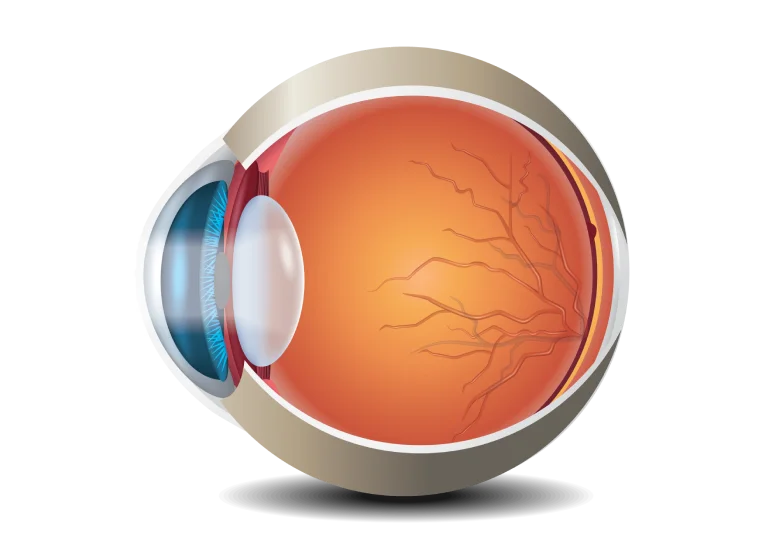
How is Yellow Dot Disease (macular degeneration) treated?
Dry macular degeneration (yellow spot) is a slowly progressing disease. There are not many treatment options for dry type. Pills containing vitamins and minerals are thought to slow down the progression. Valeda Light therapy is a new treatment alternative for dry type yellow spot disease. This treatment stops the progression of the disease and provides some improvement. Click here for Valeda treatment. for more information
Yellow spot disease that has changed from dry to wet type is a condition that requires urgent treatment. Nowadays, wet type yellow spot disease is treated with anti VGEF, which is called intraocular injection. Today there are 3 different drugs Eylea, Lucentis and Avastin.
The aim of treatment in wet yellow spot disease is to dry up unwanted vascular buds, fluid leaks and hemorrhages between the layers that cause the disease.
How to recognize yellow spot disease?
There may be no symptoms in the early stages of yellow spot disease. As it progresses, complaints such as decreased quality of vision, broken straight lines, decreased vision, inability to see details occur.
Is yellow spot disease genetic?
People with a family history of yellow spot disease are more likely to have the same disease, but it is not inherited.
Anti-Vessel Growth Therapy
(Anti-VEGF therapy) Eye injection therapy
It is currently the most effective and up-to-date treatment for wet yellow spot disease.
In wet yellow spot disease, unwanted vascular buds form between the layers that make up the back wall of the eye(see What is Yellow Spot Disease?).
Vascular growth factors that affect the area play a role in the formation of these vascular buds. In wet type yellow spot disease, these growth factors are inactivated by vascular growth inhibitor treatment and the vascular bud is eliminated, preventing leakage and bleeding.
In this treatment, medicines are given by direct injection into the eye. It is popularly known as “injecting the eye”. With this treatment, the rate of preserving the existing vision in wet type yellow spot disease within 1 year is over 90%. The rate of vision improvement in the same period is around 30%. These injections are repeated at regular intervals to prevent vision loss and even to improve vision. Yellow spot disease is a progressive disease. There is no treatment for wet type yellow spot disease other than intraocular injection anti vgef treatment. However, since the effect of the drugs is temporary, treatment should be continued as long as it is excessive. Many studies are being carried out on this subject. The characteristics of the new drugs expected to be released are both more effective and longer lasting. Yellow spot patients are advised to continue treatment as long as the doctor deems appropriate.
Other treatments:
Laser Treatment
It is the oldest treatment method for wet type yellow spot disease. The cases where laser treatment can be applied are limited today. Approximately 15% of all wet yellow spot patients are eligible for standard laser treatment. In 50% of patients with laser treatment, the vascular bud can be reactivated.
Photodynamic Therapy (PDT) (However, as of 2023, the drug Visudyne is not available, so it cannot be applied).
It is a treatment method developed after standard laser treatment and has been practiced for about 10 years. In PDT, a substance called verteporfin (Visudyn) is administered through a needle in the arm and this drug binds to the damaged tissue in the eye. A specialized laser treatment is then applied to the eye for 83 seconds. It is effective in some types of wet yellow spot disease. Generally, it does not improve vision, the rate of preserving the existing vision is approximately 50-60% in 1 year of treatment. This rate decreases in the following years. Today, it is rarely used alone, only in appropriate cases. It can also be used in combination with the newer drugs mentioned in the section below, which are given by injection into the eye. BUT THERE ARE CURRENTLY NO DRUGS FOR PHOTODYNAMIC THERAPY.
Intraocular telescopic lenses
The above treatments are intended to stop the disease. telescopic lenses are intended to improve vision. Telescopic lenses can be in the form of binocular glasses known as LVA, which are known as aids for low vision, or there are telescopic lenses that are placed inside the eye. Telescopic lenses provide some increase in vision in patients, but not all patients may be satisfied because of the narrowing of the visual field. Telescopic lenses can be used in dry and wet types of yellow spot disease. However, your doctor will decide whether you are suitable.
What should be done in follow-up?
Yellow spot disease, whether dry or wet, is a disease that requires regular follow-up. Eye angiography (FFA – fundus fluorescein angiography) and retinal tomography (OCT – optical coherence tomography) should be performed during diagnosis and follow-up.
Injection prices in yellow spot disease: In wet type yellow spot disease, there is no treatment other than intraocular injection, i.e. drug treatment. Needle prices in yellow spot disease vary according to the drug used.
Hospitals that treat yellow spot disease: All hospitals with an ophthalmologist can treat yellow spot disease with medication and injections.

