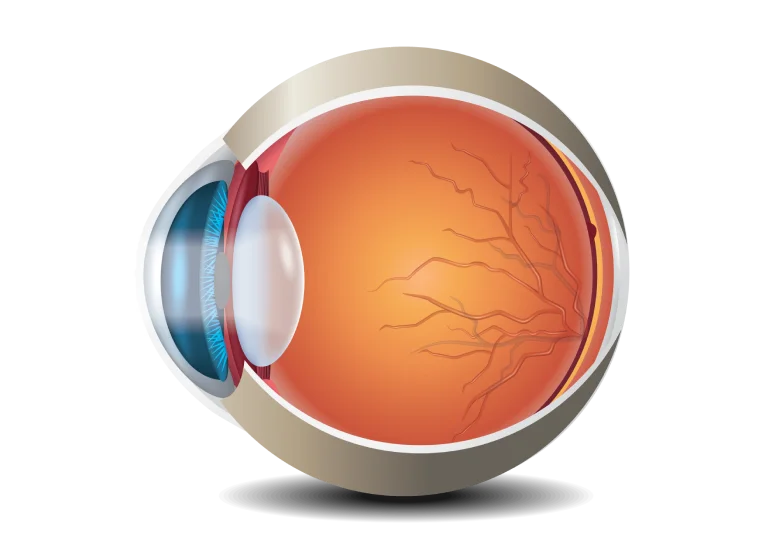
Presbyopia - What is Near Vision Impairment?
Presbyopia, or nearsightedness, is a condition that occurs after the age of 40. Presbyopia is the Greek word for the aging eye. With age, the lens of the eye gradually loses its ability to adapt and most people after a certain age have to wear glasses to read or work close up. This is not a disease, but a normal condition associated with aging, like graying hair.
Does everyone have Presbyopia - Near Vision Impairment?
Since it is an age-related condition, it occurs in everyone. However, myopic people can see near without glasses. Also, near vision may improve in people who develop cataracts.
Why doesn't everyone wear near glasses? Why is it that some people, even at an advanced age, do not wear near or far glasses?
People without eye disorders, that is, those with “zero” eyes, gradually begin to have difficulty reading, especially small print, after the age of 40 and the need for glasses arises. Since not all people age at the same age and to the same degree, there are differences from person to person. People with hyperopia need reading glasses at an earlier age. Those who are nearsighted use glasses for distance and already have nearsightedness, so when they reach the age of presbyopia they can take off their glasses and read, but this does not mean that they do not have presbyopia.
Some people are born with different eye numbers. One eye is “zero” and the other eye is myopic to varying degrees. This is called congenital monovision. One eye sees far and the other sees near better. Because they are born with this condition, they can see both near and far without glasses at any age and feel no discomfort.
Some people wear reading glasses after the age of 40, but as they get older, the number of reading glasses decreases instead of increasing, or they read completely without glasses.
Another condition that occurs with advancing age is cataracts. Some cataracts, especially nuclear cataracts, cause myopia and the need for reading glasses may disappear. However, in this case, distance vision is impaired.
How is Presbyopia - Near Vision Impairment corrected?
The simplest solution is reading glasses. Those with an eye disorder, i.e. those who wear glasses for distance, use either two glasses or multifocal glasses that show near and far. Another solution is to use special presbyopia contact lenses. However, as the age progresses, the use of contact lenses becomes more difficult due to both age-related reasons and the fact that contact lenses that show near vision impair distance vision when the near number progresses. The option for those who do not want to use these lenses is the surgical implantation of smart (trifocal or EDOF) lenses.
Can Presbyopia - Near Vision Impairment be corrected with laser?
In recent years, many eye disorders have been corrected by laser surgery. Many surgeries are also recommended for presbyopia – nearsightedness. Of course, it is not for everyone. Your doctor will decide if you are suitable.
What types of surgeries are performed for Presbyopia - Near Vision Impairment?
Monovision surgery: It is known that those who are nearsighted in one eye can live their lives without using near glasses. Lasik surgery can minimize the need for near glasses for those with Presbyopia – Near Vision Impairment when one eye is slightly myopic. This method is safe and proven.
Trifocal, Multifocal EDOF intraocular lens: Especially those with high hyperopia benefit a lot from trifocal, multifocal, EDOF (smart lens), that is, near far lens surgery.
The following methods can also be used in the treatment of presbyopia, but they are not preferred at Kaşkaloğlu Eye Hospital and are not recommended to our patients.
CK: Near vision can be achieved by modifying the cornea with radiofrequency waves. This method is not recommended for now.
Presbylacic Near vision can be achieved by modifying the cornea with LASIK surgery. It is not suitable for everyone as it is an irreversible technique.
Intracor Femtosecond laser Technolas Femtech is applied between the corneal layers. It has limited applications, not suitable for everyone, not preferred.
PresbyLens: A laser opening is made between the corneal layers and a very thin ring is placed. Clinical studies are being conducted. It is a treatment that has not yet been approved.
KAMRA INLAY A very thin round KAMRA INLAY is placed between the corneal layers with femtolaser. It is applied between the ages of 45-65. It is a new method. As a result of the application, the need for close glasses in daily life decreases. However, it is not suitable for professionals whose work is close. It is not a preferred and recommended method in our hospital.
I wear near glasses, how do I decide which treatment is right for me?
You can find a lot of information on this subject in newspapers, on television and on the internet. However, none of this is a substitute for a consultation with an ophthalmologist and a doctor who performs such surgeries.