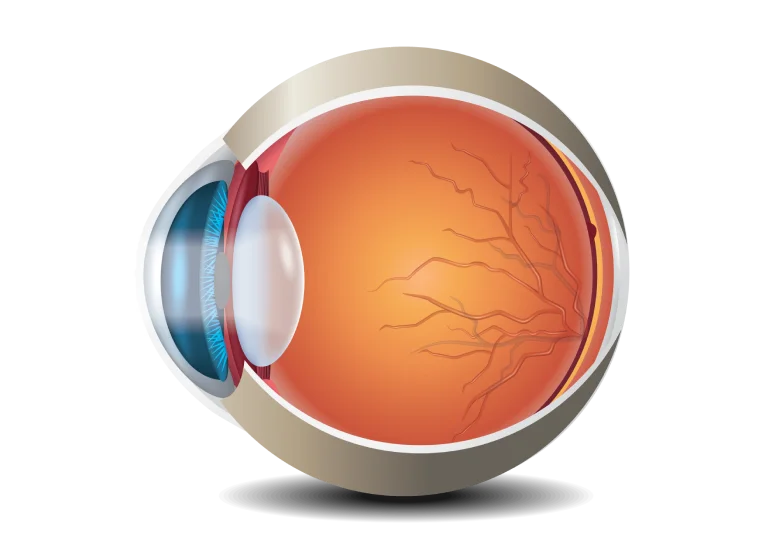
Cataract, myopia, astigmatism, hyperopia treatment with Smart Lens surgeries:
Click here for the article on who is suitable for smart lenses.
A quick word of advice: If you want to see well up close without glasses, you should choose a trifocal lens.
Trifocal and EDOF lenses, popularly called “Smart Lenses“, have been used for a long time in suitable people. Smart lenses are preferred after the age of 40 for people to be able to see near and far. In special cases, they can also be preferred in younger people. Especially those with both near and distance eye disorders are more satisfied with this surgery. However, these lenses are not suitable for everyone. Whether you are suitable depends on many factors and your doctor can decide after examining you and learning about your lifestyle.
Trifocal lenses are, as the name suggests, trifocal lenses. The most common trifocal lenses are Alcon Panoptix, Zeiss Acrilisa Tri, Johnson&Johnson and Finevision lenses.
The most common EDOF lenses are Alcon Vivity, Johnson and Johnson&Johnson, Synergy, SAV Lucidis and Medikontur ELON lenses. These lenses stand for “extended focal depth” in Turkish. The biggest advantage of these lenses, which have the status of “smart lenses”, is that there is almost no glare around the lights at night, which disturbs people.
Lenses do not have a lifespan. The eye number stabilizes some time after the surgery and does not change anymore. The surgery takes an average of 8-10 minutes and is performed under local anesthesia. It is seamless as it is performed through a very small incision.
You do not need to stay in hospital after smart lens surgery. You can go home immediately after the surgery as soon as you feel comfortable. It is necessary to keep the time between the two eyes short. Thus, adaptation will be faster. In some cases, both eyes can be operated on the same day. Recovery is fast and you can return to your normal life immediately. In the early period, moirées are seen around the lights, but in time, with neuroadaptation, these circles decrease to a level that does not disturb the person.
Many criteria are evaluated to decide which lens will be suitable for patients who will undergo surgery. We recommend that you follow the doctors’ advice in this regard. Do not forget that your doctor performs this surgery with his/her hands using devices.
Trifocal and EDOF lenses have advantages and disadvantages. Not all trifocal and EDOF lenses are the same. Your doctor who will perform the surgery will decide which lens will be suitable for you, taking into account many factors. It is best for you to follow your doctor’s recommendation.
Trifocal lenses are, as the name suggests, trifocal lenses. The most common trifocal lenses are Alcon Panoptix, Zeiss Acrilisa Tri, and Finevision lenses.
EDOF lenses: The most common EDOF lenses are Alcon Vivity, Johnson and Johnson puresee, Synergy, SAV Lucidis, Medikontur ELON. These lenses stand for “extended focal depth” in Turkish. The biggest advantage of these lenses, which have the status of “smart lenses”, is that there is almost no glare around the lights at night, which disturbs people.
Lenses do not have a lifespan. The eye number stabilizes some time after the surgery and does not change anymore. The surgery takes an average of 8-10 minutes and is performed under local anesthesia. It is seamless as it is performed through a very small incision.
You do not need to stay in hospital after smart lens surgery. You can go home immediately after the surgery as soon as you feel comfortable. It is necessary to keep the time between the two eyes short. Thus, adaptation will be faster. In some cases, both eyes can be operated on the same day. Recovery is fast and you can return to your normal life immediately. In the early period, moirées are seen around the lights and these rings decrease to a level that does not disturb the person with neuroadaptation over time.
Many criteria are evaluated to decide which lens will be suitable for the patients who will undergo the surgery. We recommend that you follow the doctors’ advice on this matter.
Trifocal and EDOF lenses have their advantages and disadvantages. Not all trifocal and EDOF lenses are the same. Your doctor who will perform the surgery will decide which lens will be suitable for you, taking into account many factors. It is best for you to follow your doctor’s recommendation.